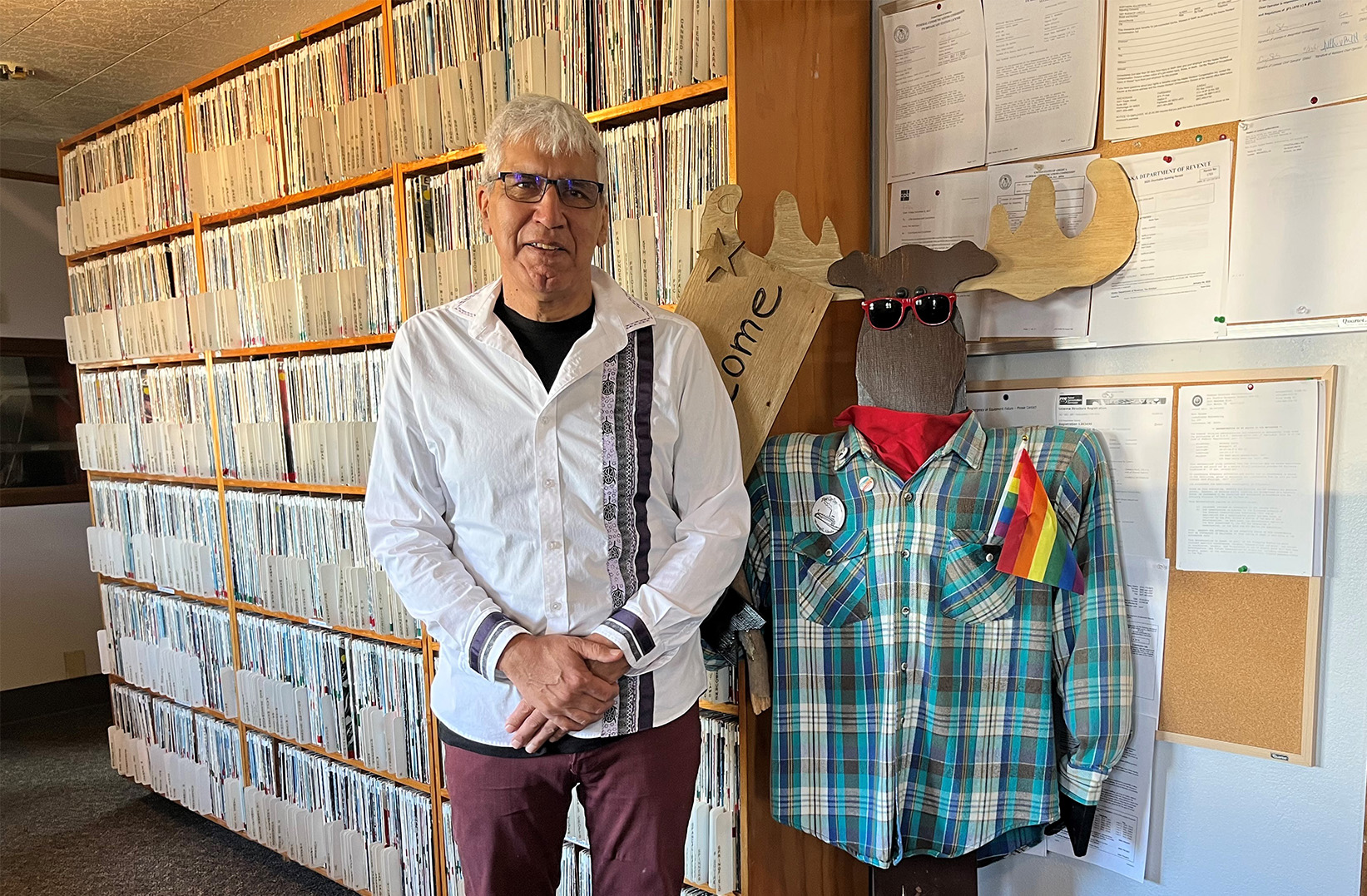
Wrangell’s federally recognized tribe, the Wrangell Cooperative Association hired a new tribal administrator in June.
KSTK’s Colette Czarnecki spoke with Albert Rinehart about his background and what his new position entails. Ultimately, he hopes for community health and unity.
Rinehart
I was born and raised in Wrangell. There were a lot of younger families and just a lot happening here. There were a lot of people my age who kind of did a lot of things that maybe were a little risky, mostly alcohol.
For me, it was like a focus on not wanting that. What I saw with my parents’ generations and alcoholism. I lost two family members from drugs and alcohol.
I’m reintegrating into the community. I’m learning that WCA can be more involved in helping to find some of the solutions to some of the issues that our families are still encountering here.
I was the director of the Head Start program that served almost all the communities in Southeast Alaska, and some of the things I heard, if I think about them too hard, they’ll bring me to tears. There’s little children involved in difficult situations, which is very similar to what I experienced growing up here.
When did you leave Wrangell?
When I was 18. I went to college, where I went to Stanford University.
The summer before I went to Stanford, my mom died.
After a lot of heartfelt conversations with my aunts, other adults and teachers, my dad was left to raise my six younger siblings. I got there with my Wrangell education and was dropped into a university of higher learning that was way beyond what I would have expected.
It just took so much out of me, so I ended up leaving after my sophomore year. I got married, that didn’t work out, and eventually applied to reenroll and got accepted back at 24 years old going on 25.
After you graduated, what did you do?
I came back to Wrangell again.
I found a job working in the school district that was a tutoring and counseling program. By then, I was remarried and had my first son with Nila.
It was hard to find a job. I found one, but Nila was not able to really find one. We decided to move to Juneau.
We raised our sons in Juneau, but we also spent a year here and there, some in New Mexico, where my wife is from, and then she went back to college and went and did a master’s program at Harvard.
I started working in the Juneau school district as the JOM (Johnson O’Malley) director, and that also provided tutoring and counseling services to Native students in Juneau.
What inspired you to apply for the Tribal Administrator job?
Nila and I have been thinking about coming back to Wrangell for quite some time. A dear friend of mine passed over last summer, and I came back for his services, and the job became open and I applied and was offered the job.
What is important to you as a Tribal Administrator?
I think the most important thing is to understand the priorities of the Tribal Council, and get my direction from them.
We have a program called WEAVE (Wrangell Eliminating Abuse and Violence via Education).
It’s a program that’s designed to help with prevention of domestic violence.
We’re getting more involved in the tourism industry. A lot of Wrangell’s attraction is around culture.
What are your hopes for your vision with this role?
To support Wrangell’s efforts; to be a healthy community that’s supportive of each other. There’s a lot of decisiveness in this country, and I hope we will be a little more united as a community.
Do you have direct communication with the United States government? What is that relationship like?
I think there’s a lot left to be done with that.
Alaska has only one reservation, that’s Metlakatla.
Wrangell is one of the Landless Five.
Yeah, and I’m one of the landless people. Yeah, that’s been a long struggle.