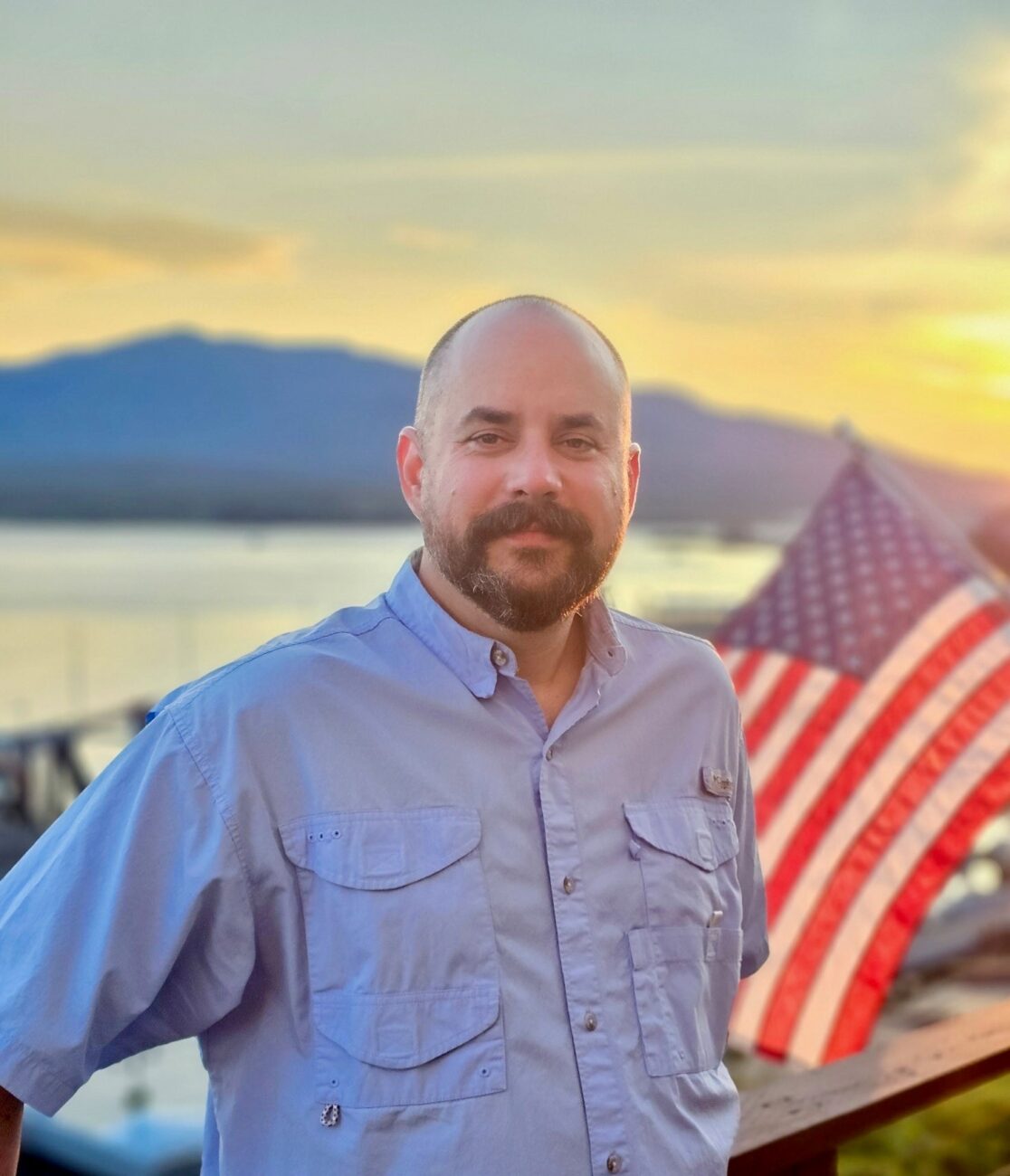
Alaska State Representative Jeremy Bynum visited Wrangell Oct. 25 to meet with constituents and visit some of the borough’s new developments, like Alder Top Village that will have housing and the deep water port mill area.
Bynum represents Alaska’s first district, which includes Wrangell, Ketchikan and Metlakatla. He spoke with KSTK’s Colette Czarnecki on his first legislative session and his plans to support Southeast Alaska.
This session was very good for us. We were able to pass two pieces of legislation. We had House Joint Resolution Five, that was for Secure Rural Schools, and that’s funding for the schools. Both the Senate and Congress approved reauthorizing Secure Rural Schools funding in December. Funds are distributed annually to rural boroughs and school districts. The next step is for President Trump to sign the SRS Reauthorization Act.
It’s very much needed here in Wrangell and in Ketchikan as well.
And the second bill that we passed was HB 75 and basically, HB 75 was a correction that was needed in the law, specifically around exemptions for the permanent fund dividend.
One major area was Merchant Marine Academy. So if we had kids leaving our schools and they went to the Merchant Marine Academy, they weren’t eligible for the exemption. And so this fixed that.
Do you have any news about transportation in Southeast Alaska, such as the Alaska Marine Highway?
We all know that the budget situation is very tight and it’s very challenging.
I know that our southern connection to Rupert and or an alternative location like Hyder, is also a top priority. I’ve been working very closely with Southeast Conference to to see how we can expedite getting that route opened.
It’s going to take collaboration, not just in the legislature. We need to get the governor behind it.
And education, what is going on right now with the budget that you’re aware of?
Tight budgets going forward, so I don’t expect to see another big BSA bill.
I’m going to be pre filing a bill that specifically focuses on technical readiness and career training. We’re calling it the TRACT Act. It’s going to try to change how we look at educating our kids coming out of high school and making sure that their workforce ready.
Let’s talk about renewable resources and energy for Southeast Alaska, and here in Wrangell of course.
When we talk about renewable energy integration into systems, that’s something I’m very familiar with. I think there’s opportunity for that here.
We talk about renewable, of course, we’re big advocates of renewable here in Wrangell and in our intertie system that includes Petersburg and Ketchikan, and will soon include Metlakatla, because we’re hydropower community, and we want to make sure that we have reliable, low cost hydropower, and if we can integrate other systems like solar or wind into the system to make it more reliable and keep costs down, that’s something we’re absolutely going to want to do.
And then housing in Southeast Alaska. Are you working on anything to help retain people in this area?
I think Wrangell is setting the example with this development that we have going out the road here.
You got the mill property development. I know it’s going to happen and be successful, but you’re going to need a place to put people that is affordable. And once you start drawing people in and families in, and they have an affordable place to live, that means they’re bringing their kids here, and they’re raising our kids in our community. That means kids are in our schools, and that means more funding for our schools. The housing is the key that creates economic opportunity here.
I have one last question, it’s about the fishing industry. I know here, [Borough Manager Villarma] Mason initiated the whole sea otter management resolution proposal that other Southeast communities have signed on as well. Can you speak on that?
You know, I’ve been talking for quite a few years about how we need to really look at how we are managing our sea otter populations and the impact that they have on our local fishing industry. It’s a big deal here in Wrangell.
I support saying that we need to make sure that we’re managing those populations in an appropriate way.
It’s not just the federal government and the state. There’s going to have to be consultation and collaboration with the Tribes, and what is their role in helping with that? And it’s going to be a tough conversation.
One of the things that you didn’t mention is, and I’ve been really involved with as well, has been the green crab invasion and what we’re going to do to manage that. We’re in the early stages of that. I’m working with the representative from District Two to have a broader conversation about invasive species.
At minimum. I’m sure we’re going to have a resolution for the legislature this cycle where we talk about invasive species.
Is there anything else you would like to add to this conversation?
I think the one thing I want people to know is, is that I have an open door, and that means that you can call me, you can email me.
I want to hear from the community about what their concerns are.