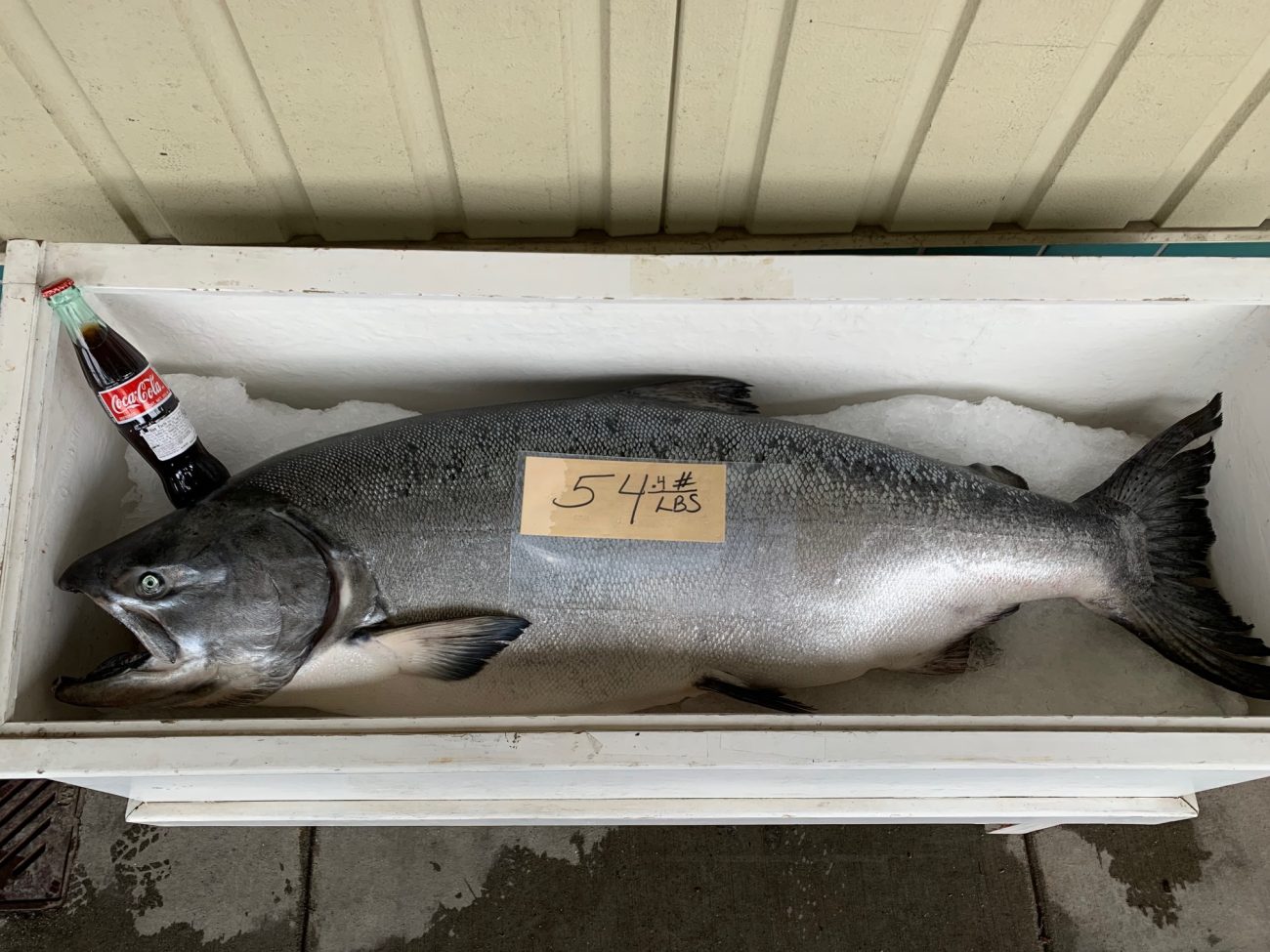
Fishermen in Southeast Alaska will be able to harvest about 70,000 more king salmon this season than last year. The state Department of Fish and Game announced the harvest goal for all gear groups on March 31.
“It’s not, you know, a great catch limit, but it’s a decent catch limit,” said fish biologist Dani Evenson, with the Alaska Department of Fish and Game. “Even though it’s sort of an average catch limit, it came as welcome news, because last year was the lowest ever.”
How many king salmon Southeast Alaskans can catch each year is determined by the Pacific Salmon Commission. The group oversees a treaty between the U.S. and Canada that ensures both countries can harvest the fish.
Alaska’s take this year is 207,400 king salmon, also called Chinook. That amount is in line with recent years. . .except last year. Last year’s regional harvest goals plummeted because of lower salmon forecasts in other regions.
Chinook are highly migratory, traveling thousands of miles in their years-long journey to return to their spawning grounds.
“Some originating as far away as the Oregon coast, the Columbia River, the Washington coast and British Columbia,” said Evenson. “They all swim up into our waters, into the Gulf of Alaska to take advantage of the nutrient-rich waters to feed and grow.”
Evenson coordinates the salmon treaty for Fish and Game. She said that because of the king salmon’s migrations, there are many stakeholders.
“Southeast Alaska Chinook is one of the most complex, if not the most complex, fishery management structures in the state of Alaska,” Evenson said. “These fisheries are managed in accordance with a large suite of international, national and domestic policies and regulations.”
Most of Southeast’s king salmon harvest — 146,000 fish – goes to salmon trollers who fish with hook and line. The sport sector is the next largest with about 43,600. The net fisheries – seining, gillnetting and set nets – don’t target king salmon and have smaller harvest goals for bycatch.
The Pacific Salmon Treaty is renegotiated every 10 years. The state is already working on the details of its agreement for 2028.