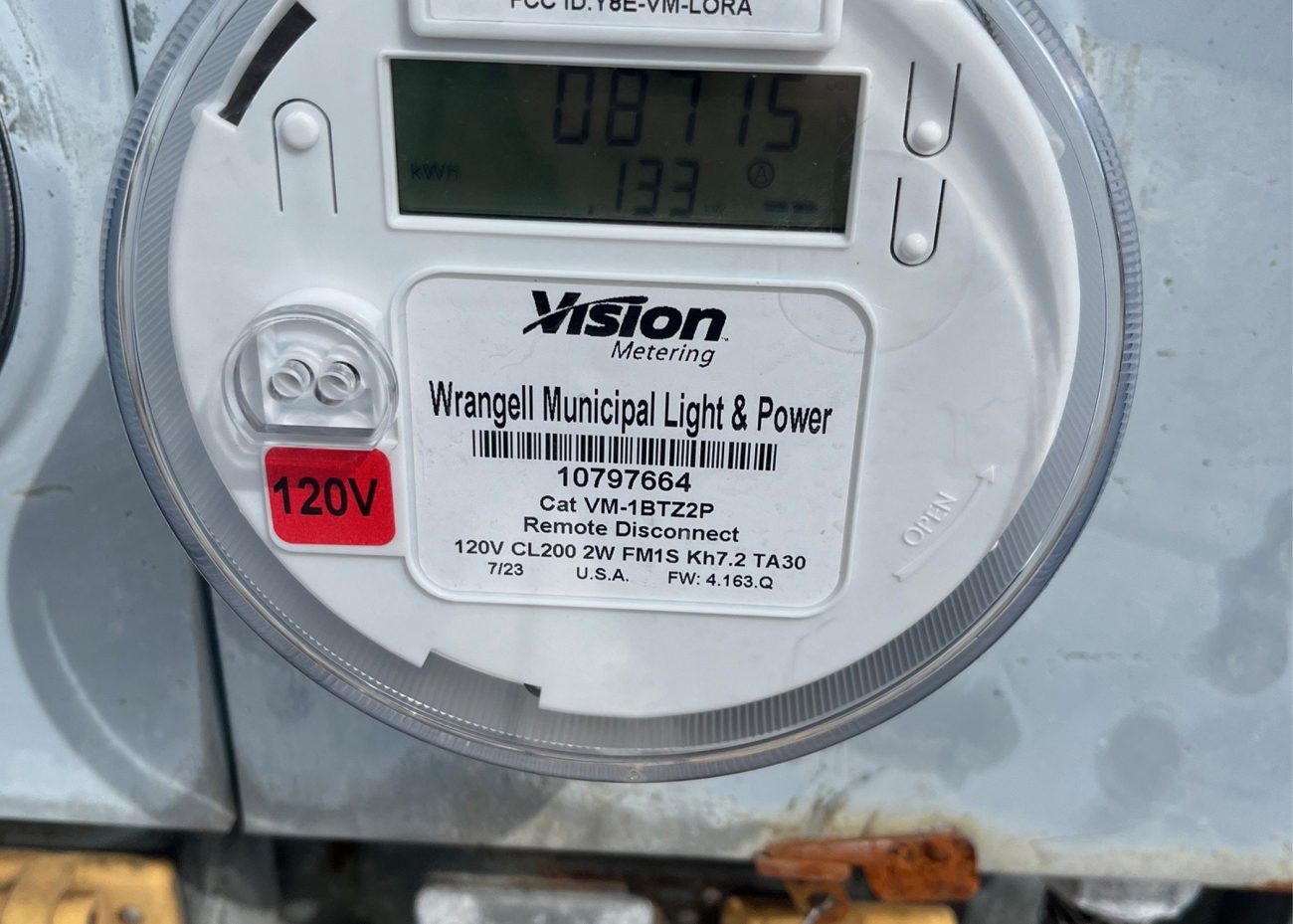
Wrangell’s electricity runs on hydropower, but a decades-old cost savings incentive program is still in place. The borough created the electric heat rate program in 2002 to encourage customers to transition their homes from diesel to electric heat to save money on their bills. Many residents made the switch, thinking they would stay on it for the long haul.
But the Borough now wants to terminate the program July 1, 2027. This means no new customers will be able to sign up for the program, and those already on it would lose the benefit next summer.
Customers on the program got a separate meter just for electric heat and hot water that locks in the lowest possible rate from the start instead of working down through the tiered system to get there. Those on the program pay $0.1075/kWh.
Additionally, the Borough also wants to move all residential electric customers to a flat rate, alongside its proposal to end the program. Both proposals went before the local Borough Assembly in the form of a one-time resolution to consider at a mid-April meeting.
Borough Manager Mason Villarma said most customers would save $10.65 a month or $127 each year with the flat rate, which slightly bumps up the cost for people on the electric heat rate program. The flat rate will charge customers $0.1265/kWh.
Initially the Borough would lose revenue from flat rate
He said the Borough would lose revenue from implementing the flat rate based on current consumption rate, but he’s hopeful that will change based on future industry.
“I think that a lot of these economic development measures that we’re bringing on – Alder Top lots we just sold, some new housing is going to be built – that we’re going to be able to cover the margin later on, just through organic growth,” Villarma said.
The Borough’s proposal said after five years, the electric heat rate incentive program would fade out for individual customers, and only extended it for the past two decades because the Borough did not consistently enforce it.
“The heat rate was not something that was to be phased out”
And Villarma said the incentive is less necessary for residents now since electric heat is cheaper than diesel.
But not all Wrangellites are happy with the change. Terri Henson remembers things a little bit differently when the Borough formed the program, saying the Borough mixed up two different incentives — the heat rate incentive, and the business incentive rate for new and expanding businesses. She said the Borough’s plan would phase out the business incentive rate in five years, not the heat rate program.
Henson told the Wrangell Borough Assembly at an April 14 meeting that she worked for the Borough’s electrical department when the heat rate incentive was developed.
She said, “The heat rate was not something that was to be phased out in the future, or at any point.”
Henson said the program was supposed to encourage people to stop using fossil fuels. In order to do that, people had to buy and install separate components for their heating systems, like meters and wiring.
She said, “It’s expensive to set up for that kind of stuff, and so to do away with that was not the intention.”
Henson said she took advantage of the incentive program and it’s a difference of about $100 a month.
“I want you guys to realize it’s not just $20 that you’re looking at,” she said. “Increasingly, you’re looking at a substantial amount over the year.”
The assembly decided to continue considering the proposed termination in May.
But the assembly passed the flat rate resolution. For most residents, that means a lower electricity bill. But heavy users consuming over 2,000 kWh/month could see their monthly bill go up. The flat rate change takes effect July 1.