U.S. Forest Service personnel have been visiting Southeast Alaska communities to understand how residents want the Tongass National Forest used. The federal agency is doing a comprehensive revision of the Tongass National Forest plan, which will guide long-term management. They’re focusing on tribal, subsistence, recreation, tourism and timber aspects.
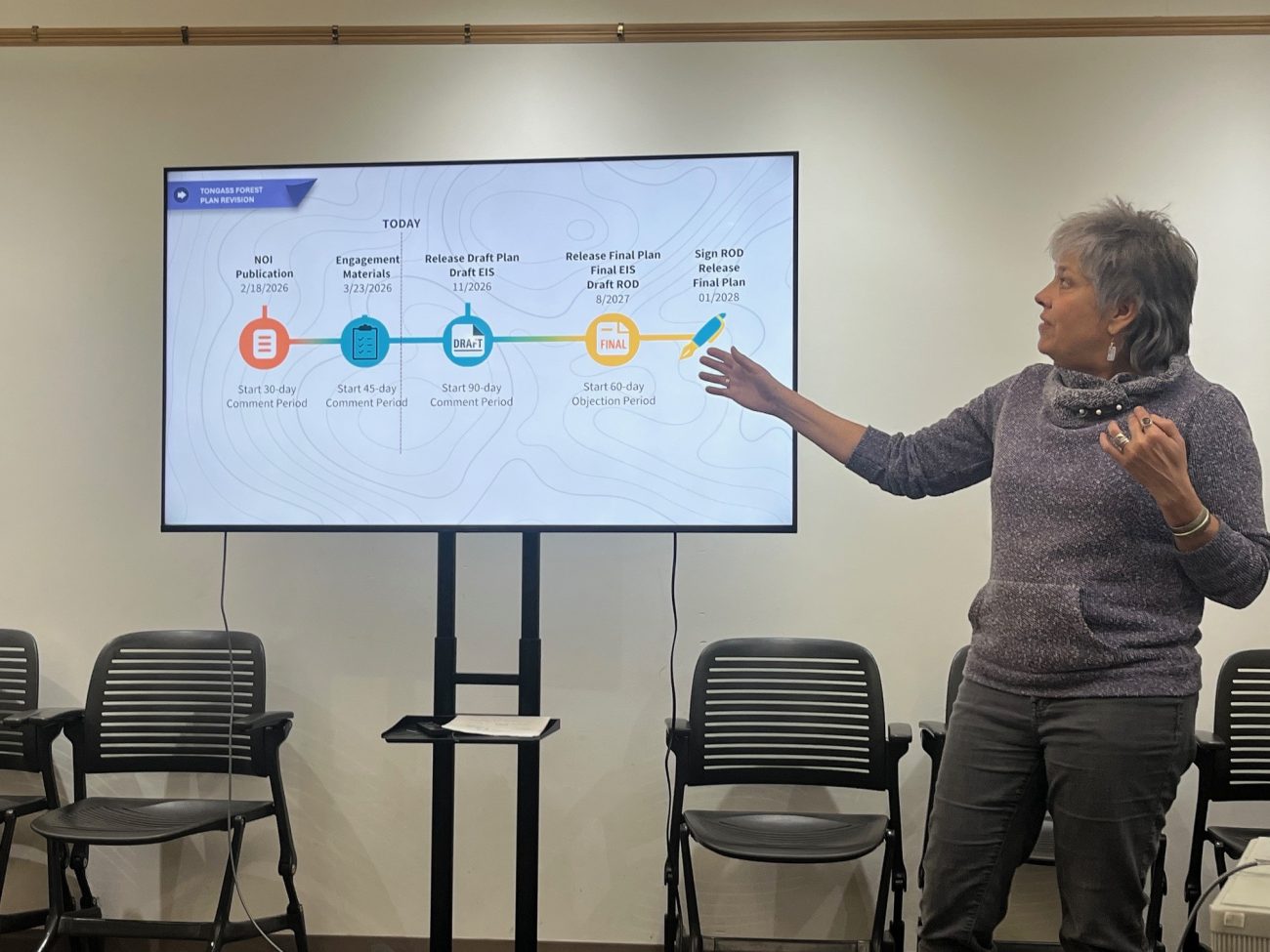
Tongass National Forest Deputy Supervisor Barb Miranda visited Wrangell April 21 and gave a brief presentation to community members.
“Down in the Lower 48, the towns and wild places are surrounded by civilization,” she said. “Here it’s the opposite — we have our communities surrounded by this wild place that provides so much for our food, for our subsistence and for our economies.”
Miranda said the plan aims to balance ecological preservation and community needs. Towards the back of the room were activities where people could write down their thoughts and take a survey.
Community members highlighted the importance of balancing commercial activities like logging and recreation with subsistence needs.
Albert Rinehart, tribal administrator for the Wrangell Cooperative Association, just finished an activity that had him identify the greatest subsistence harvest in a certain area of the Tongass.
“Subsistence is important to a lot of our smaller communities, rural communities,” he said. “If we’re gonna be doing any planning, it should be to help those habitats prosper and have our subsistence game be available.”
The current comprehensive plan for the Tongass was revised in 1997 and was last amended in 2016. The deadline for Southeast communities to comment is May 6.
The U.S. Forest Service plans to release a draft of the environmental impact statement in November with a 90-day comment period following.
Additionally, they plan to release the final draft of the statement in the summer of 2027 with a 60-day objection period. They aim to have the final plan in January of 2028.