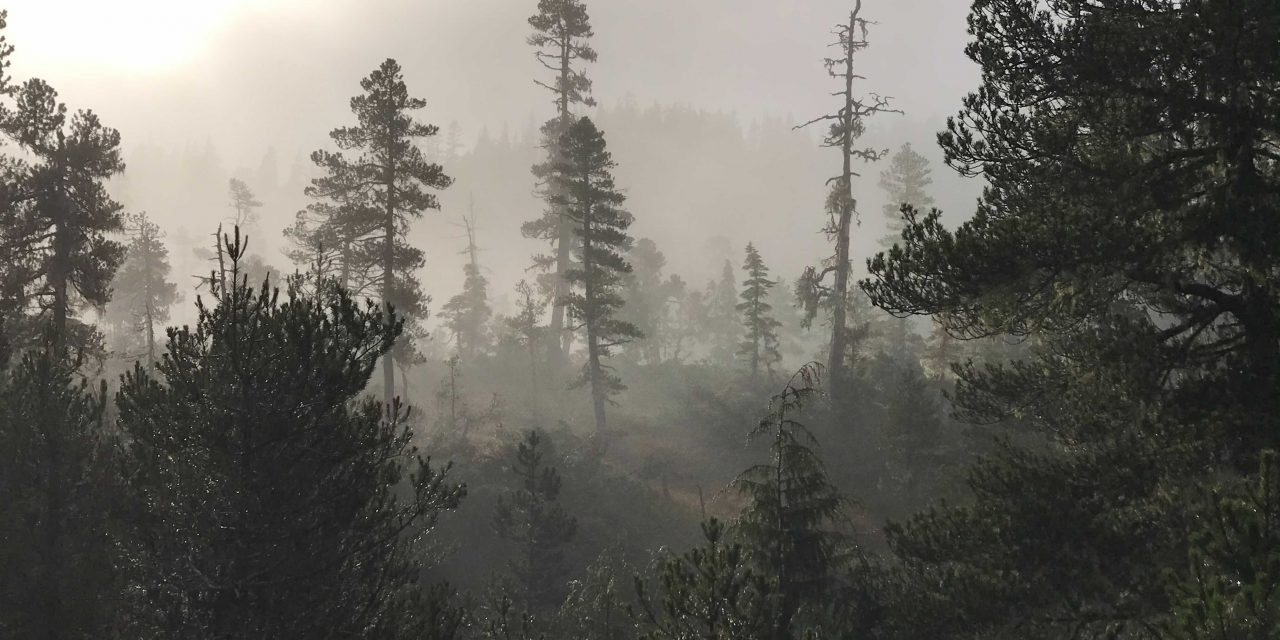
The Wrangell Ranger District has recently wrapped up a large goshawk survey to prepare for potential timber sales. There is a push to increase logging on federally managed lands in Alaska following President Donald Trump’s executive order to “unleash Alaska’s extraordinary resource potential”
Ahead of any logging operation, there are a variety of wildlife surveys required before anything can be cut, including goshawk surveys. Anna Belback is a natural resource technician for the U.S. Forest Service.
We’ve gone kind of all around Wrangell Island, a ton of different areas. Part of the island that I never thought I would see, and some places that I quite frankly don’t really want to hike back into because they’re man, they’re pretty wicked.
Despite her efforts – and two other crew members – no goshawks were identified by this survey. She says that the surveys must happen in two separate years prior to a timber sale, but they don’t have to be consecutive.
To do the surveys, field technicians hike into areas of land, often with no trails, to play bird calls to trigger responses from goshawks and other birds of prey that may be in the area.
In June, Belback says the calls mimic the goshawk alarm call, one a female might give her partner when there is danger in the area. In July, they play a mixture of alarm calls and fledgling begging calls. The ones a baby goshawk would make when asking their parents for food.
They repeated this process over most of the potential federal timber units.
This might seem like a lot of effort to go through to identify some hard-to-locate, sparsely populated birds, but this hawk has a history of contested protection in the Tongass National Forest.
In 1994, the Center for Biological Diversity petitioned for this subspecies, the Queen Charlotte gosshawk to be listed under the Endangered Species Act. The petition in some ways led to the renaming of the Northern goshawk to the American goshawk and the Eurasian goshawk, according to Forest Service biologist Joe Delabrue.
The way I understand it, back when it was proposed for listing, the U.S. Fish and Wildlife Service separated out the two populations: the one in Southeast Alaska and the ones in British Columbia and the ones in B.C. got listed, but the ones in Alaska didn’t.
Whatever you call them, the ones in Alaska were not listed as endangered, at least in part, because of the Tongass resource management plan.
Cooper Freeman is the Alaska director of the Center for Biological Diversity. He says with surveys only occurring ahead of timber sales, there isn’t consistent population data to compare.
He says that, with the renewed push for logging in the second Trump administration, there have been more surveys, but the methods were not very effective at locating the hawks.
The environmental group is pushing to protect old-growth forests, not only the goshawks, but for many species that Freeman says rely on unfragmented habitat in the region.
I think it would be an error to paint this as birds versus the economy I mean… It’s time for the Tongass to move on and start taking care of its forests and protecting them for their highest value, which is leaving these old-growth trees standing.
He says they would like to see an emphasis on other types of economic activities like hunting and recreation to create a more sustainable Alaska economy.