Native Youth Olympics coaches and athletes from Southeast Alaska taught newcomers the sport at the Elders and Youth conference in Anchorage’s Dena’ina Convention Center, Oct. 18-21. NYO is the youth version of Arctic Sports and includes events that mimic skills needed for hunter survival.
Listen to the story:
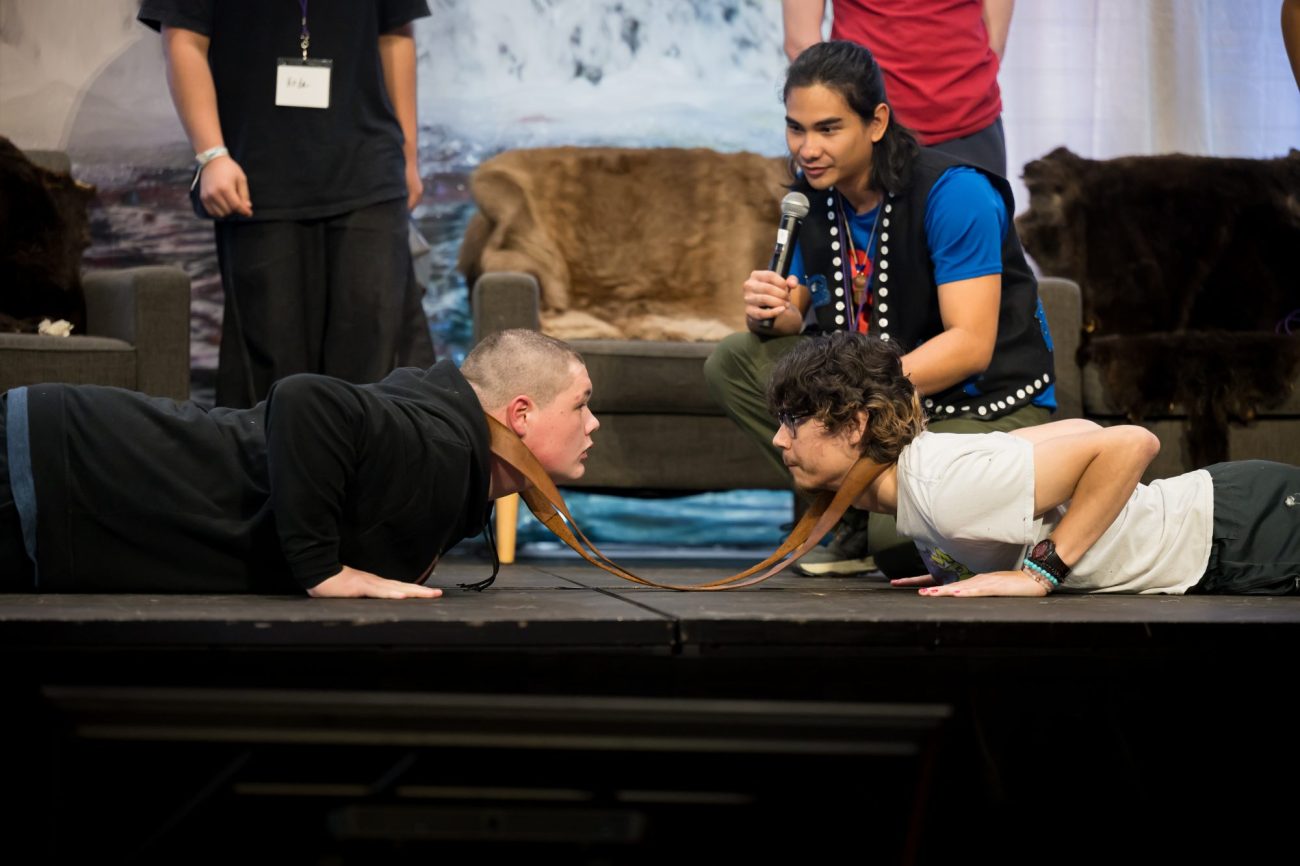
As a high school junior in Juneau, Dawn Pescon has been a part of NYO for years. The 17-year-old knelt on stage before a few hundred onlookers, demonstrating the kneel jump while Coach Matthew Quinto explained it.
“Ice pulls the heat from your body, and so oftentimes if you’re on ice, it’s better to kneel,” Quinto said. “So, let’s say they’re cutting up a caribou or ice fishing, and the ice breaks underneath them, or a polar bear comes up; they need to get up and move fast, and so this is what this game is about.”
The athletes must jump up and forward, landing solidly on their feet. They’re judged on the distance.
“And whenever they’re ready, they’re going to jump as far as they can right from this kneeling position,” Quinto said.
On stage, Pecson and another athlete started swinging their arms, building momentum. Then, they launch.
“Nice!” Quinto said, to applause from the crowd. “The landing is also important for this game.”
NYO is growing internationally, with competitions hosted in several northern countries. It’s something that Quinto is passionate about – he helps run the NYO program for the Central Council of Tlingit and Haida Indian Tribes of Alaska and teaches the sport anywhere there’s interest. At this April’s NYO event in Juneau – Traditional Games – teams participated from New Zealand, Canada and Mexico.
“We call it the spirit of the games,” Quinto said. “A lot of other sports are all about beating the other team, or they’ll put each other down. They’ll talk, you know, they’ll talk smack. It’s normal. But with NYO and Traditional Games, you don’t get that. It’s all about lifting each other up.”
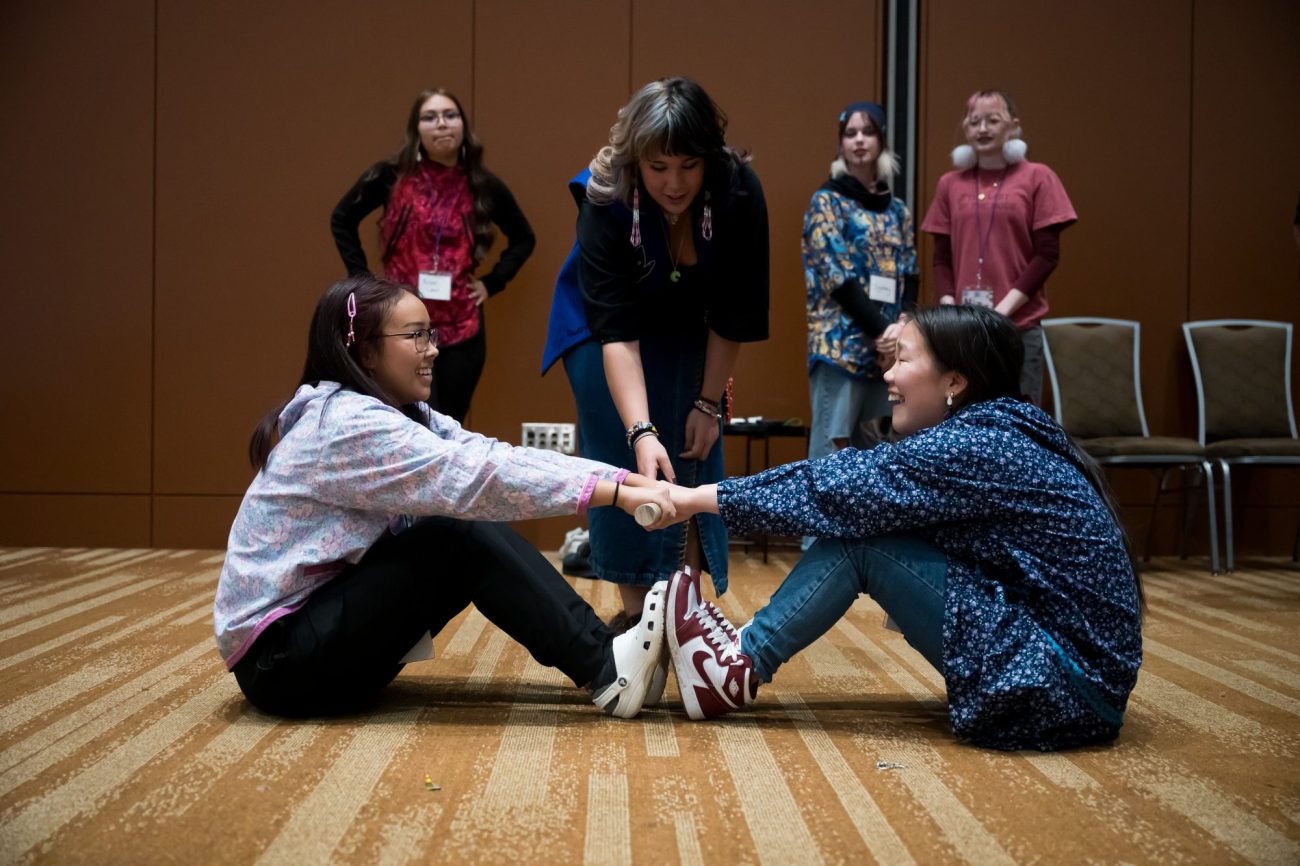
Next to the stage on the carpet, 13-year-old Jonah Hurst was on his hands and knees, teaching another young athlete a move called “moose”. They locked shoulders and pushed.
After shuffling a foot this way and a foot that way, one of their shoes came untied. They both laughed.
This is Hurst’s first Elders and Youth conference. He’s from Wrangell in Southeast Alaska, which doesn’t have an official NYO team, but some students still travel to Juneau in the spring for Traditional Games.
“What I want for Wrangell is for us to have a team with a coach in practices throughout the week,” Hurst said.
Hurst is in the 8th grade and has played on other sports teams in middle school. He said NYO is different – it focuses on technique and posture. And culture.
“All the people I’ve met within NYO have all been so kind and nice and loving throughout,” Hurst said. “Compared to other sports like wrestling and basketball, where some people can be really rude and egoistic, this one, compared to all others, really just seems like the most chill.”
Pecson, the kneel jump demonstrator, said she’d like NYO to keep spreading worldwide.
“I want to see this in the next 50 years go to the Olympics because these have been games that have been passed down from generation to generation,” she said. “It is a great way to compete, and not only with others, but with yourself, to see where you can go. It’s a lot of personal growth as well as growth against each other.”
That’s one goal that all the athletes and coaches agree on – getting NYO into the Olympics. As that mission evolves, they’ll keep spreading the sport throughout Alaska and beyond.